When You’re So Busy Preparing for What Could Go Wrong, You Miss What’s Actually Happening
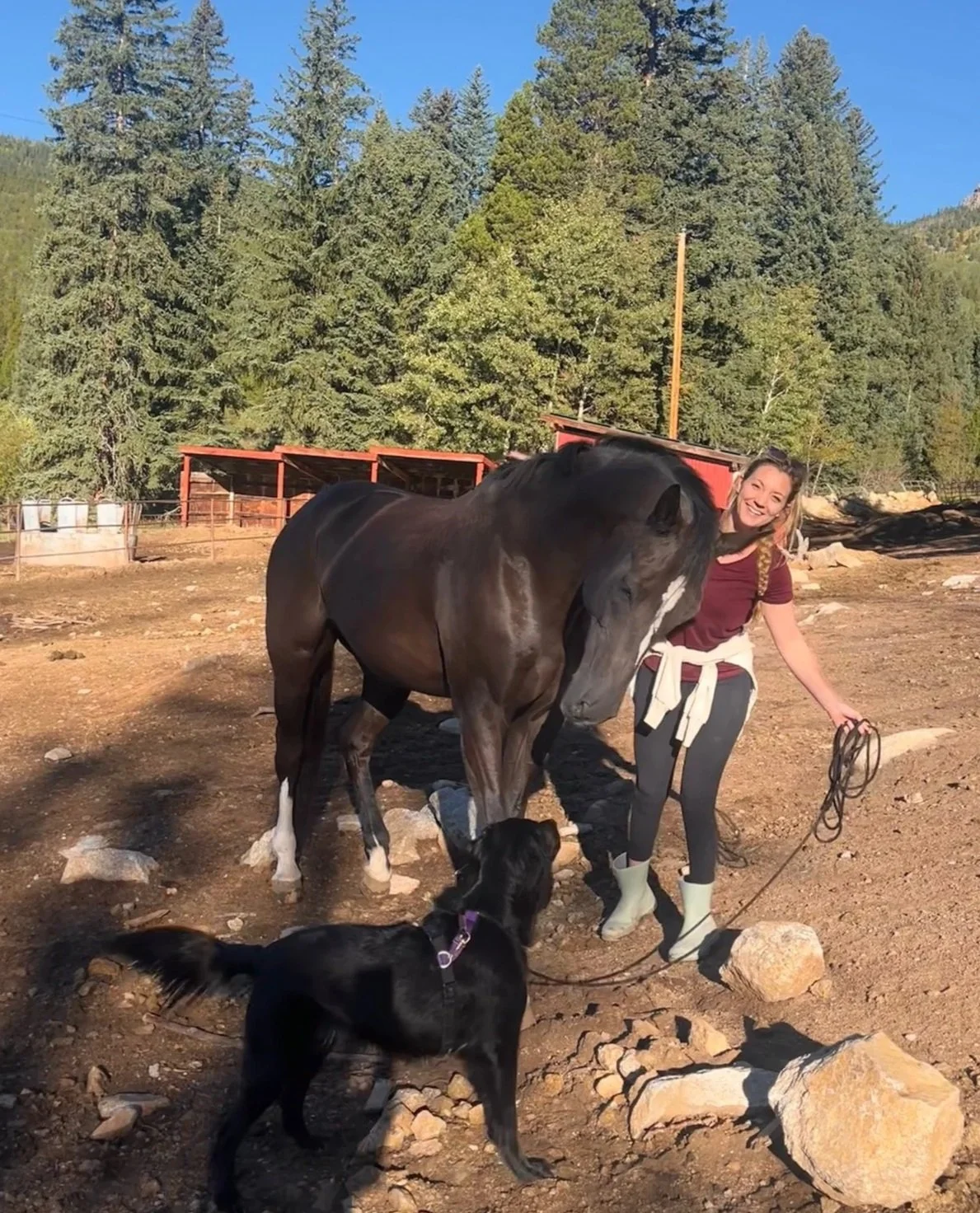
Nora and I have been slowly easing into our new life in Colorado, and today was only our second time exploring the outdoor arena together. Everything about the space is still relatively new to her, so I went in with the intention of simply spending time together, walking, noticing the environment, and letting the experience unfold without asking for too much. Around the edges of the arena, though, there are patches of very tempting grass, and Nora quickly figured that out.
The first few times she reached for a bite, I redirected her and kept us moving. But after a while, I noticed something shifting in me. I started anticipating the grass before she even moved toward it. I would get ahead of her, mentally and physically, preparing to block her from something she had not actually done yet. My attention started narrowing around what I expected might go wrong, and I realized I was becoming more focused on preventing a problem than on staying in relationship with her.
That realization felt familiar in a way that I think a lot of people will recognize. Sometimes hypervigilance does not feel like panic. Sometimes it looks like being highly prepared, reading the room, anticipating everyone’s needs, noticing every shift in someone’s tone, rehearsing conversations before they happen, or trying to solve a problem before it has even fully formed. It can feel responsible. It can even look like competence. But inside the body, it often feels like never quite getting to arrive in the present moment because some part of you is always trying to get three steps ahead.
At one point, I realized I had been so focused on whether Nora might go for the grass that I had completely missed something important. We had quietly wandered into a corner of the arena she had been hesitant to approach the day before. That was a real moment of progress, and I almost missed it because I was busy waiting for the next thing to go wrong.
That is often how these patterns work in our own lives. You may be so focused on whether someone is going to pull away that you miss the ways they are actually showing up. You may be so busy bracing for conflict that you miss a moment of connection. You may be scanning for disappointment, rejection, criticism, or danger so intensely that your nervous system struggles to register safety when it is actually present. Even when something is going well, part of you may still be waiting for the other shoe to drop.
So I practiced something different with Nora. Instead of getting ahead of her and intervening before anything had happened, I tried to stay in my body and respond to what was actually unfolding. I noticed my own urge to anticipate. I paid attention to my senses. I let her look around, sniff, pause, and take in the environment. If she actually reached for the grass, I could gently ask her to move on with me then, but not a moment sooner.
That did not mean giving up my intention for our time together. I had gone into the arena hoping for a shared experience of walking, exploring, and connecting, not a grazing session. The work was not about becoming completely passive or pretending I had no preferences or boundaries. It was about noticing the difference between holding an intention and trying to control every possible outcome.
That distinction matters in trauma work too. Many people learned that anticipating was protective. If you could read the room fast enough, keep someone happy enough, predict the conflict early enough, or prevent yourself from making the “wrong” move, maybe you could stay connected, stay safe, or avoid being hurt. Those strategies often made sense once. The difficulty is that the nervous system can keep using them long after the original danger has passed.
This is one of the things we may explore during an equine connected EMDR intensive at A Place Along the Way. Not just talking about why you became hypervigilant, but noticing what it actually feels like in your body when uncertainty shows up. What happens when you do not immediately move to fix, prevent, manage, or predict? What thoughts appear? What sensations show up? What part of you believes it has to stay ahead of the moment, and what is it afraid would happen if it did not?
Working alongside horses can make these patterns surprisingly visible because there is something real happening in front of you. You are not only describing your relationships or talking about the past. You are noticing yourself in relationship, in real time. You may feel the urge to control, retreat, appease, overthink, disconnect, or get everything “right,” and then have the opportunity to slow that moment down enough to understand what is happening underneath it.
The goal is not to strip away every protective instinct. It is to build more choice. To begin noticing the difference between a present moment boundary and an old protective response. To learn that you can pay attention without constantly bracing, that you can respond without predicting, and that you can stay connected to yourself while still being in relationship with someone else.
Today, Nora reminded me how easy it is to miss what is actually happening when I am too focused on what might happen next. Sometimes healing is not about becoming less aware. It is about becoming aware of more than just the danger. It is allowing your nervous system to notice the corner of the arena you were finally able to walk into, the person who stayed, the moment that went differently, or the part of you that no longer has to work quite so hard to keep everything under control.
