What Looks Risky Isn't Always Unsafe: What My Horse Taught Me About Trauma, Trust, and Nervous System Healing
The other evening, after nearly two weeks of not riding because of travel and dangerous summer heat, I climbed onto my horse, Nora, with no saddle and no bridle. If you had walked into the arena at that moment, you might have thought I had completely lost my mind. A horse hadn't been "worked" in nearly two weeks. There was no tack, no carefully planned training session, and to many people, it would have looked reckless, unsafe, or irresponsible. In many situations, it would be.
But what you couldn't see was the relationship underneath that moment.
You couldn't see the thousands of quiet moments that came before it. The days spent simply sitting with her in the pasture, the walks, the grooming sessions, and the times I chose not to ride because the heat made it unfair to ask more of her body. You couldn't see the conversations we've had without words, the consistency we've built over years, or the trust that has developed one interaction at a time. Most importantly, you couldn't see the countless moments where we learned each other's nervous systems long before I ever considered climbing onto her bareback.
That relationship wasn't built that evening. It was built over years of ordinary moments that no one else witnessed.
It made me think about how often we judge safety by appearances. We like checklists because they feel reassuring. Wear the right equipment. Follow the right steps. Stay inside the lines. And to be clear, those things absolutely have their place. Equipment matters. Good judgment matters. Context matters. This isn't an argument that everyone should ride bareback or bridleless, nor is it a suggestion that those choices are inherently safer or better. Rather, it's an invitation to look a little deeper before deciding what safety actually means.
Because what looks risky isn't always unsafe, and what looks safe isn't always safe.
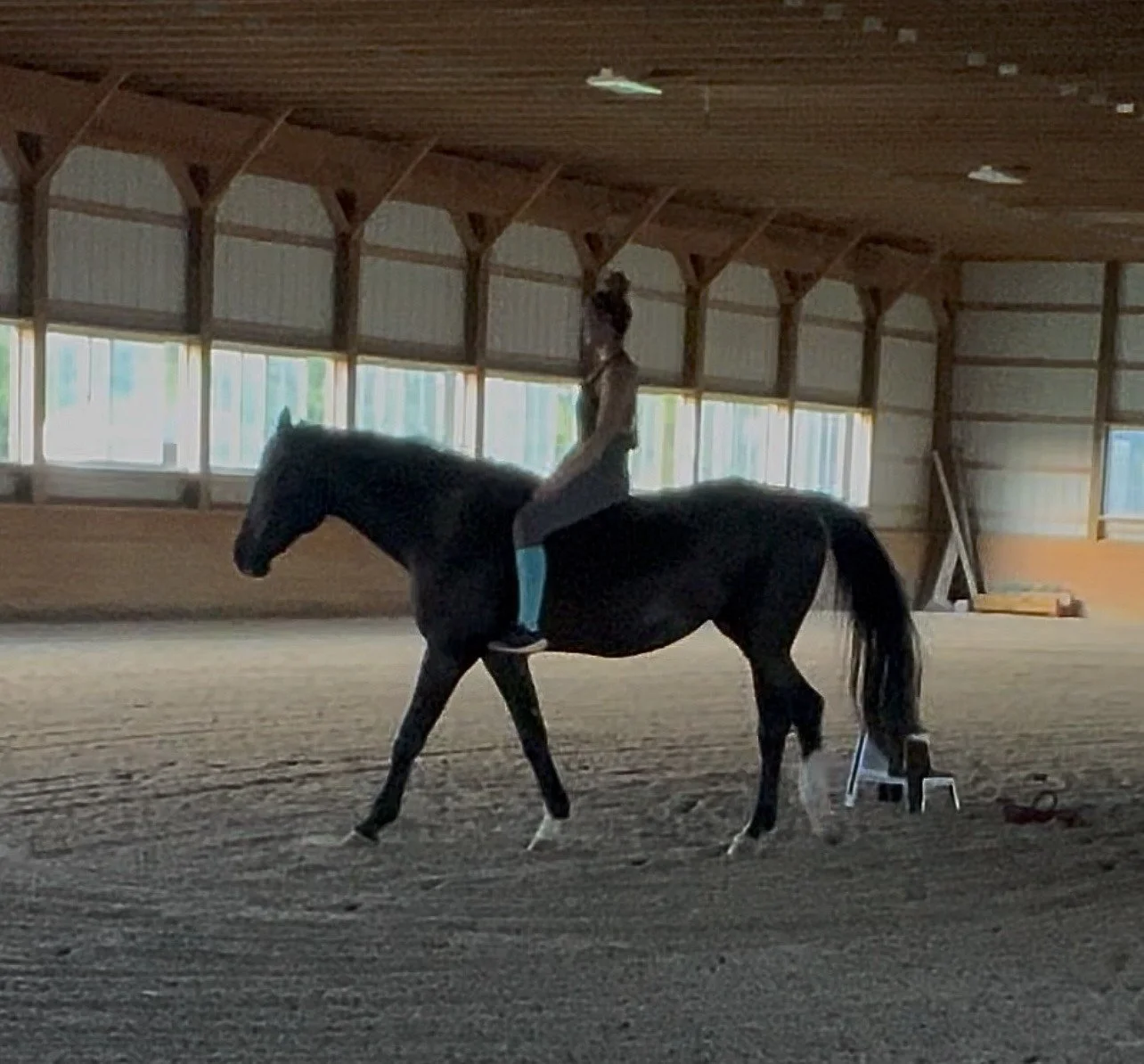
A low quality photo of a high quality moment in our relationship
I see this every day in trauma therapy. One of the most common questions people ask is, "Why do I still feel unsafe when I know I'm safe?" The answer often has very little to do with logic. Trauma changes the nervous system. Even after danger has passed, your brain and body may continue responding as though the threat is still present. You can know you're safe while your body still braces for impact. You can trust your partner while your nervous system expects abandonment. You can desperately want to move forward while every part of you feels frozen.
Healing isn't simply learning to think differently. It's helping your nervous system discover, through lived experience, that the danger is no longer happening. That kind of healing happens in relationship.
Whether I'm providing EMDR therapy, guiding an EMDR intensive, or incorporating horses into the healing process, I rarely begin by asking someone to do the hardest thing they've ever done. Instead, we build a relationship first. We create experiences that allow the nervous system to settle, not because it has been convinced through logic, but because it has repeatedly experienced safety. Over time, the body begins to believe what the mind may have understood for years.
From the outside, healing can look messy, unconventional, or even uncomfortable. Someone may finally set a boundary after decades of people pleasing. Someone may choose to feel emotions they've spent a lifetime avoiding. Someone may decide to leave a relationship that appeared perfectly acceptable to everyone else. To an observer, those choices can seem impulsive or risky. What they don't see is the relationship underneath. They don't see the months of trust built between therapist client. They donand 't see the internal resources that have been carefully developed. They don't see a nervous system that has slowly learned it can tolerate what once felt impossible.
Sometimes what appears "safe" is actually avoidance that has quietly kept someone stuck for years. Sometimes what appears "risky" is the healthiest, most carefully supported decision someone has ever made.
Healing, like horsemanship, isn't built on following rules perfectly. It is built on relationship. Relationship with your therapist. Relationship with your body. Relationship with your nervous system. Relationship with the parts of yourself you've spent years trying to silence. The most meaningful growth rarely happens because someone hands us a better checklist. It happens because, over time, we begin to trust ourselves enough to know when it's safe to take the next step.
That kind of trust cannot be rushed, and it cannot be faked. It is earned through thousands of small moments that no one else sees.
Maybe that's why I love working with horses. They remind us that true safety isn't found in controlling every variable. It is found in cultivating a relationship strong enough to navigate uncertainty together. The more time I spend with Nora, the more I'm reminded that trust isn't something we announce. It's something we build quietly, patiently, and consistently until one day it becomes visible in ways that surprise even us.
If you've been feeling stuck in weekly therapy, or if your mind understands you're safe but your body hasn't caught up yet, you're not broken. Your nervous system may simply need a different kind of healing experience. Whether through EMDR therapy, an EMDR intensive, or equine-assisted trauma therapy, healing begins the same way it always has: not with perfection, but with relationship.
Sometimes the safest place we can begin is in a relationship where our nervous system finally has permission to believe what our mind has known all along: that we are safe enough to heal.
