What Happens During an EMDR Intensive?
Choosing an EMDR intensive can feel hopeful, exciting, and understandably a little intimidating. Many people wonder what it would actually be like to spend several hours or several days focused on trauma healing. They may picture six straight hours of talking, emotional intensity, or being expected to push through more than their nervous system can comfortably hold. That is not how intensives at A Place Along the Way are designed.
Each intensive has a clear beginning and ending, with a set start time and a set end time, but the day itself remains fluid within that structure. I think of the experience as having a natural crescendo and decrescendo. There are moments when we move more deeply into the work, followed by periods of reflection, rest, grounding, integration, nourishment, and ritual. The structure creates a dependable container, while the pacing stays responsive to what the client needs in real time.
Different Lengths for Different Needs
Intensives are available in several formats, beginning with a three hour half day and extending through full days or up to five consecutive days. A full day includes six hours of therapeutic work with a one hour lunch break in the middle, along with many shorter pauses woven throughout the day. These breaks are not an interruption to the process. They are part of the process.
Food is provided for every service option. Julie prepares artisan grazing boards with care and customizes them according to the preferences and dietary information clients share in their intake paperwork. Grazing boards are available during half day, full day, and multi day intensives, while full day and multi day experiences also include meals. The intention is to reduce the number of practical things a client has to manage so more energy can remain available for the work itself.
The Day Is Guided by Your Nervous System
Although there is always a thoughtful plan, there is not a rigid script. We may begin the day with one intention and discover that the client’s nervous system is asking for something different once we are together. Even if an activity felt supportive the day before, that does not automatically mean it will feel supportive today.
Consent is an ongoing part of the work. I regularly check in about what feels manageable, what feels useful, and whether the pace needs to change. We may ask questions such as:
• Does your body want more stillness or more movement right now?
• Does deeper processing feel available, or do we need more preparation?
• Would it feel supportive to go outside, create something, rest, eat, walk, or simply pause?
This kind of flexibility matters because trauma healing is not about making the nervous system comply with a schedule. It is about listening closely enough to notice what supports movement without creating overwhelm.
When Horses Become Part of the Work
Some intensives include horses and some do not. When horses are involved, we often begin on the ground rather than moving immediately into mounted work. Healthy relationships cannot be rushed, and the earliest stage of the work is often about building enough familiarity, safety, and mutual understanding for a relationship to begin taking shape.
Ground based work may include walking together, observing the horse, noticing how the horse responds to proximity or distance, and exploring mirroring exercises through a polyvagal or interpersonal neurobiology lens. A client may practice matching pace with the horse, noticing when connection feels natural, or becoming curious about what happens internally when the horse pauses, turns away, moves closer, or waits.
These moments can open important conversations about boundaries, trust, attachment, leadership, asking, receiving, and being seen. The horse is not expected to perform, and neither is the client. We are paying attention to what happens between two nervous systems sharing space.
Rhythm, Music, Art, and Movement
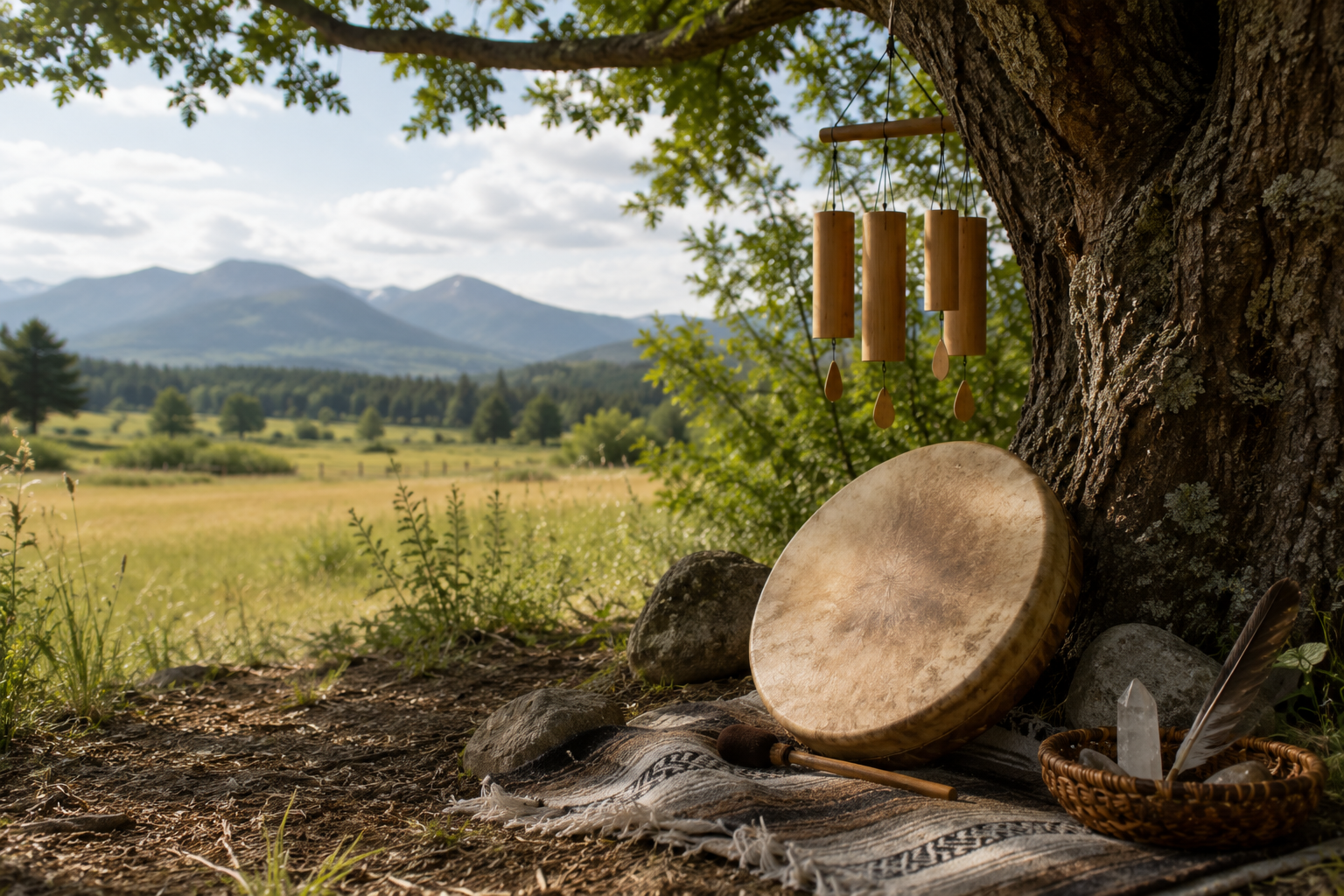
Rhythm is one of the many ways we can support regulation and organization in the brain and body. Depending on the client, we may use rhythm bells attached to a person or a horse during a walk, or we may introduce drumming, simple instruments, music, repetitive movement, or steady breath.
We may also bring in art, journaling, symbolic ritual, or elements from the natural environment. Some clients respond to sound. Others respond to movement, texture, visual expression, silence, or open space. The work is customized according to what seems to help the client remain present and connected.
The goal is not to create a busy day filled with activities. The goal is to have enough options available that we can follow the client’s nervous system with care and creativity.
Optional Reiki Support
I am also a Reiki Master, and clients who are interested may choose to incorporate Reiki into their intensive. Reiki can offer another gentle opportunity to slow down, notice the body, and support rest and integration during emotionally demanding work. It may be included during a grounding period, a transition between activities, or toward the end of the day as part of the natural decrescendo of the intensive.
Reiki is always completely optional and is never treated as a requirement for healing or as a replacement for trauma therapy or medical care. Some clients find energy work meaningful and supportive, while others prefer not to include it at all. Both choices are fully respected, and Reiki would only become part of our time together with your clear interest and ongoing consent.
Mounted Work and Embodied EMDR
When mounted work feels appropriate for both the client and the horse, it can offer a powerful way to support body awareness. Many trauma survivors are highly skilled at understanding their experiences intellectually while struggling to notice what is happening physically. Mounted body scans can help bridge that gap.
The movement of the horse creates a steady rhythm that may help a client notice breath, tension, pressure, balance, emotion, or sensation in a way that feels more accessible than sitting still in an office. Rhythmic riding may happen with music or without it. Sometimes the work is quiet and focused on sensation. Other times, rhythm becomes an active part of the processing.
Mounted EMDR may also be incorporated. In traditional EMDR, bilateral stimulation may come from a light bar, handheld buzzers, tapping, or eye movements. In mounted work, the natural bilateral movement of the horse can become part of that stimulation. This allows trauma processing to occur within an embodied, relational, and rhythmic experience.
The Environment Begins Supporting You Before the Day Starts
There is also something important about the setting itself. Before any formal exercise, processing set, or structured intervention begins, clients are already arriving into a very different kind of environment.
A Place Along the Way sits at nearly 9,000 feet in the Rocky Mountains, where the air feels different, the landscape opens, and the pace of the world naturally begins to shift. Horses move through the property alongside chickens, ducks, cats, and dogs, and the presence of animals can create a sense of life, rhythm, and connection before any therapy begins.
Simply breathing the mountain air, hearing the sounds of the property, watching the herd, and stepping away from the demands of ordinary life can be healing in and of itself. The environment is not a backdrop to the work. It is part of the work.
What the Day Is Really Designed to Offer
An EMDR intensive is not six hours of nonstop processing. It is a carefully held experience that moves between depth and rest, reflection and rhythm, structure and flexibility. The day may include EMDR, equine work, movement, art, ritual, food, silence, time outdoors, and moments of simple connection.
What happens will depend on the person, the day, and what their nervous system is ready for. The purpose is not to accomplish the greatest possible amount of therapy. The purpose is to create enough safety, time, spaciousness, and support for meaningful healing to become possible.
