How Can Horses Help Heal Eating Disorders? The Science Behind Equine Therapy and Recovery
When people first learn that I incorporate horses into therapy, they often smile and say something like, “That sounds so peaceful.” While spending time with horses can certainly be calming, relaxation is not the primary reason they are such powerful partners in eating disorder recovery. In fact, some of the most transformative moments happen without anyone ever getting on a horse. The healing comes from the relationship itself and from what horses naturally invite us to notice about ourselves.
One of the biggest misconceptions about eating disorders is that they are simply about food. While food and eating behaviors are certainly part of the illness, they are rarely the root of it. For many people, restriction, bingeing, purging, compulsive exercise, or obsessive thoughts about weight become ways of coping with overwhelming emotions, perfectionism, anxiety, trauma, shame, or the need to feel in control. Over time, the eating disorder becomes less about food and more about survival.
As this happens, many people lose touch with their own bodies. Hunger and fullness cues become difficult to recognize. Emotions are pushed aside or ignored. The body becomes something to fight against rather than something to listen to. Recovery is not simply about eating differently. It is about rebuilding trust with your body and learning that it is safe to experience your internal world again.
This is where horses offer something uniquely powerful.
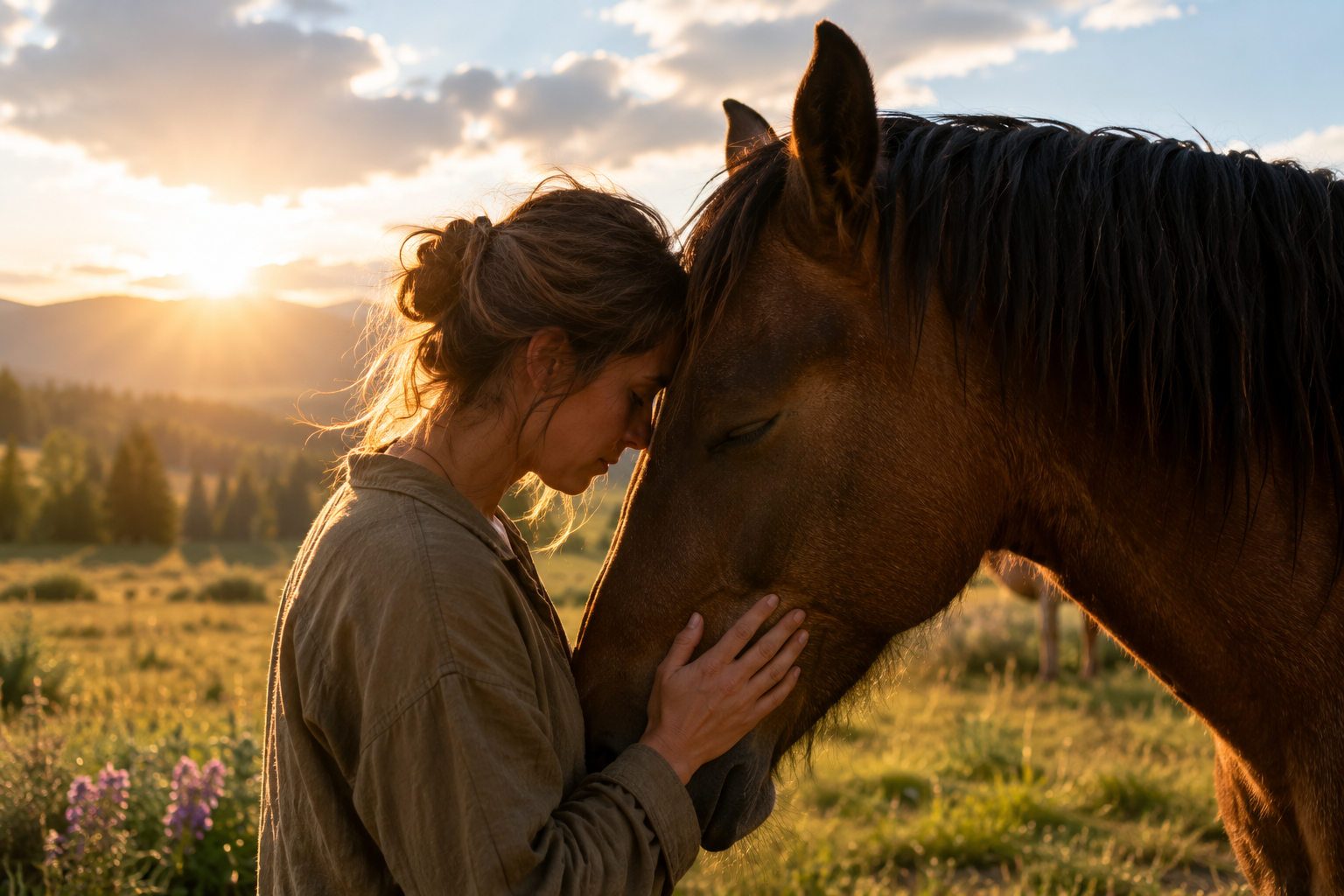
Horses are prey animals, which means their survival has depended on reading the environment with incredible accuracy for millions of years. They constantly notice subtle changes in breathing, muscle tension, posture, movement, facial expression, and energy. They are not evaluating whether someone is attractive, thin, muscular, or successful. They are simply asking one question: “Does this feel safe?”
Research has shown that horses are remarkably sensitive to human emotional states and body language. Rather than responding to the words we say, they respond to what our nervous systems are communicating. A person may insist they are perfectly calm while every muscle in their body is bracing for danger. The horse often notices that disconnect before the person does.
This is not because horses possess magical healing powers. It is because they are extraordinarily observant animals whose survival depends on accurately reading others. They provide immediate, honest feedback without judgment or criticism. That kind of feedback can be incredibly valuable for someone whose eating disorder has taught them to disconnect from their own thoughts, feelings, and physical sensations.
There is also fascinating neuroscience behind why this work can be so meaningful. When we interact with calm, regulated beings, our own nervous systems often begin to regulate alongside them through a process known as co-regulation. Research has shown that spending time with horses may reduce stress hormones, increase mindfulness, improve emotional regulation, and strengthen awareness of internal bodily sensations. These are all areas that are commonly disrupted in eating disorders.
Many eating disorders also develop alongside trauma or difficult attachment experiences. If your body has learned that emotions are overwhelming or that vulnerability is unsafe, it makes sense that you would try to protect yourself through control. Horses create opportunities to practice something different. They invite us into the present moment, where we can notice what is happening in our bodies without immediately trying to change or escape it.
One of the most beautiful things about working with horses is that they have absolutely no interest in what your body looks like. They do not know your weight. They do not know your clothing size. They do not know how many calories you ate today or whether you exercised this morning. They are not impressed by perfection, and they are not critical of imperfection. They respond to authenticity.
For many people recovering from an eating disorder, this can be one of the first relationships they have experienced where acceptance is not earned through appearance, achievement, or performance. A horse does not ask you to shrink yourself in order to belong. It does not ask you to be more disciplined, more productive, or more attractive. It simply asks you to show up honestly.
At Wholehearted Healing, equine-assisted psychotherapy is never about becoming an experienced rider or learning advanced horsemanship. No previous horse experience is necessary. Instead, we thoughtfully integrate evidence-based approaches including EMDR, attachment theory, nervous system-informed care, and eating disorder treatment with carefully facilitated interactions alongside horses. Together, we help clients rebuild trust in themselves, reconnect with their bodies, and discover that healing is not about controlling every part of themselves. It is about creating enough safety to finally begin listening.
Perhaps that is the greatest lesson horses have to offer. Recovery is not about becoming someone new. It is about remembering who you were before the eating disorder convinced you that your worth depended on changing your body.
